
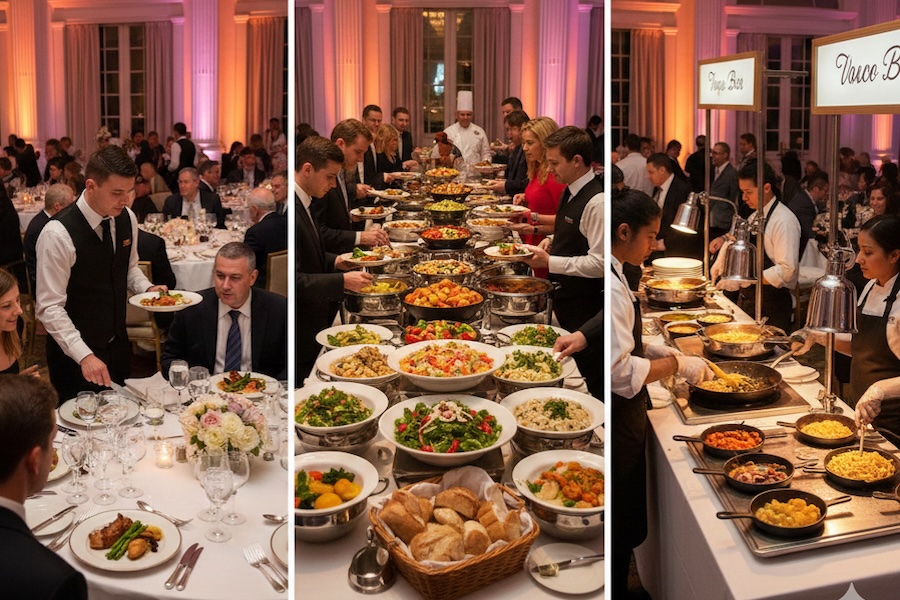
When planning your reception or banquet, you generally have three main options: plated dinner, traditional buffet or interactive stations.
Food can be the largest line item in an event budget, but the way you serve that food is just as important as what’s on the menu. The serving style sets the tone for the evening, dictates the flow of the room and significantly impacts your timeline. So, it does require a great deal of thought to make sure it fits with the rest of the plans of your wedding and reception.
The Formality of Plated Dinners
If you are aiming for high elegance and strict timing, a plated dinner is the gold standard. Guests remain seated while servers bring courses to them, which allows for consistent conversation and a controlled timeline. This style is perfect for formal weddings or corporate galas where speeches and presentations need to happen on a tight schedule. However, plated meals require precise RSVP tracking for meal choices and typically require more service staff, which can influence the budget.
Buffets and Interactive Stations
For a more social and lively atmosphere, buffets and stations are excellent choices. A buffet allows guests to customize their portions and ensures that picky eaters can find something they enjoy. It is generally more efficient for feeding large crowds quickly. “Stations” take this a step further by scattering food options around the room. Think of a carving station in one corner and a pasta bar in another. This encourages movement and mingling, preventing the event from feeling stagnant with people at a stall waiting in line to fill their plates. While stations can sometimes require more floor space, they add an entertainment element to the dining experience.
When choosing which style to offer, consider your guest count and the vibe you want to create—formal and structured or relaxed and interactive.
Recent Comments