Banquet Hall, Wedding Planning, Wedding Reception
Ask couples what they regret about their wedding and the answer is rarely the flowers. It’s that the whole thing blurred. Six hours evaporated and they remember almost none of it. This is a known phenomenon. High arousal and constant task-switching genuinely interfere with how memories consolidate, which is why the day can feel like a montage you watched rather than lived.
Build the Pauses into the Schedule
Good intentions lose to a timeline every time. If a moment is not on the schedule, it will not happen, so put it on the schedule. Many couples take fifteen minutes alone immediately after the ceremony before joining anyone. Your coordinator can hold the door. It is often the only quiet moment of the entire day and couples name it as their favorite one.
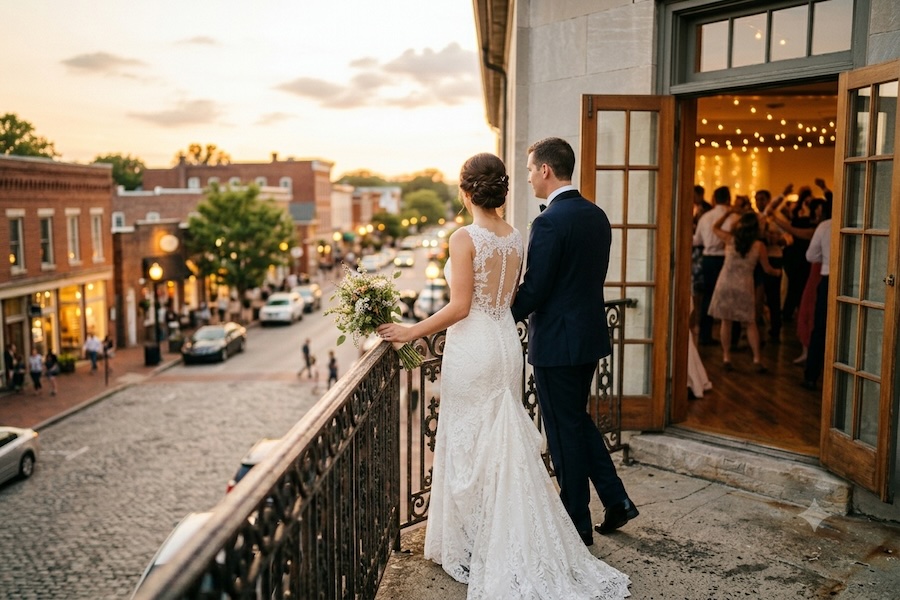
Schedule a second pause later. Step out to a balcony during dinner service, look back at the room and take in the fact that everyone you love is in one place eating together. Twenty minutes of deliberate stillness costs you nothing and buys you the memory.
Remove the Jobs That Steal Your Attention
You cannot be present while you are working. If you are answering vendor questions, wrangling a seating problem or watching the clock, you are the event manager, not the guest of honor. Hand every operational decision to someone else before the day starts and mean it. Tell your point person they have full authority to solve problems without consulting you.
Eat. Seriously. Ask for a plate to be held and actually sit down for it. Couples who skip dinner spend the last two hours running on cake and adrenaline. Skip the receiving line if it drains your energy and greet tables during dinner instead. Choose three things that matter most to you, protect those fiercely and let everything else be imperfect.
Presence is easier when someone else is running the machinery. Villa Ragusa’s Event Coordinator manages timelines, vendors and day-of details so you can be a guest at your own reception. Reach out to talk about your date, your guest count and the space that suits your celebration.
Wedding Planning, Wedding Reception, Wedding Venue
A 6-Hour Timeline of a Villa Ragusa Wedding Reception
The transition from the ceremony to the party is the most anticipated part of any wedding day. Visualizing how six hours will unfold in a grand space helps hosts manage the energy of their guests and ensure every moment feels intentional. A typical evening begins with a cocktail hour in the lobby or on the balcony. As guests mingle, the newlyweds can utilize the dramatic marble staircase for photos, creating a grand entrance that sets the tone for the night. This first hour is essential for setting the mood with light music and appetizers while the main gallery remains a hidden surprise.
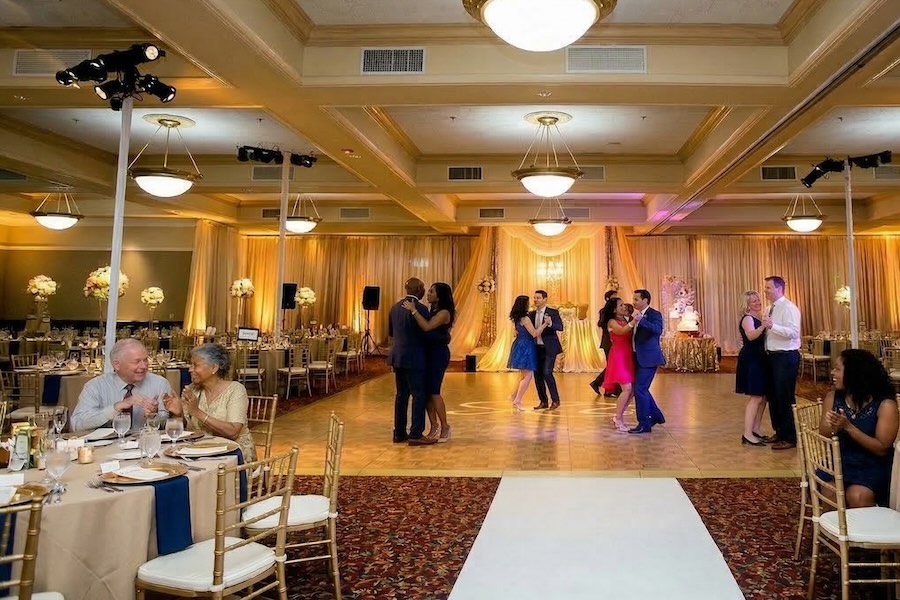
- Once the doors to the ballroom open, the second hour usually focuses on the grand entrance and the first dance. The expansive hardwood dance floor is perfect for couples who want to make a statement with their choreography.
- Following the formal introduction, dinner service takes center stage during the third and fourth hours. This is the ideal time for toasts and speeches. The acoustics of the room are designed to ensure that every heartfelt word is heard clearly by guests at the back of the room.
- Between courses, the couple can move from table to table, taking advantage of the spacious layout to greet every guest without feeling rushed.
- As the clock hits the fifth hour, the energy shifts toward the celebration.
- Cake cutting and parent dances serve as the bridge between the formal dinner and the high-energy dance party.
- The final hour is dedicated to an open dance floor where the marble and granite accents reflect the ambient lighting, making the room feel like a high-end club.
Benefits of a Structured Wedding Reception Timeline
By following a structured timeline, hosts can ensure the night moves smoothly from the elegance of the arrival to the joyous chaos of the final song. This flow allows every guest to experience the full range of the venue’s beauty while celebrating the couple’s new chapter.
Wedding Reception, Wedding Venue
Planning a wedding that honors two distinct cultures requires a venue that understands the importance of heritage and flexibility. In the heart of Silicon Valley, Villa Ragusa serves as a premier destination for couples looking to blend South Asian, East Asian, or Middle Eastern traditions into a seamless celebration. One of the most significant hurdles for multi-cultural ceremonies is finding a space that accommodates specific culinary requirements.
Bring Your Own Caterer
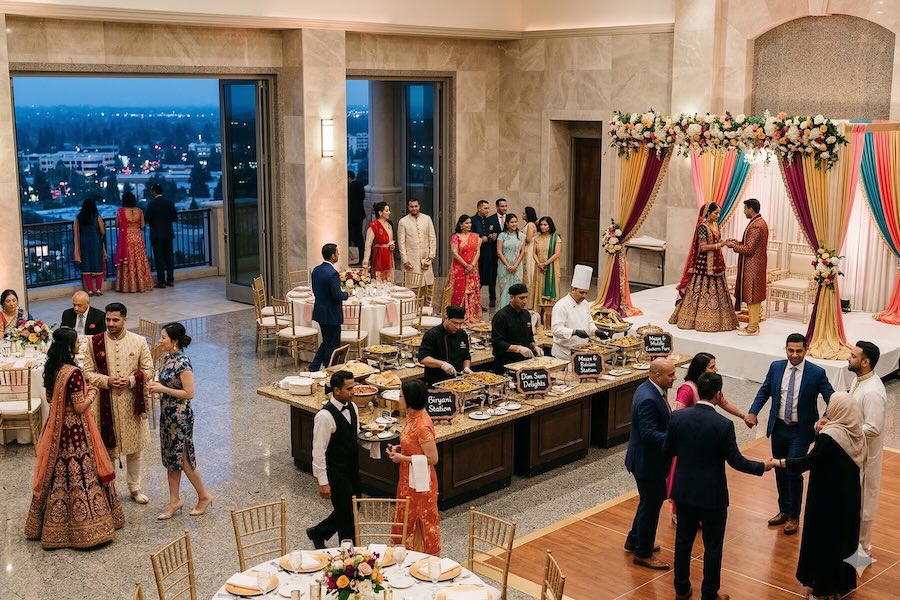
Many high-end venues insist on in-house catering, which can limit the authenticity of traditional dishes like biryani, dim sum, or mezze platters. Because this venue allows outside catering, families can bring in specialized chefs who understand the nuances of their specific cuisine.
Beyond the menu, the architectural layout supports the grand scale often associated with diverse cultural weddings. Large guest capacities are a necessity when guest lists span multiple generations and extended family networks. The transition from a traditional ceremony to a high-energy reception is made easier by the various gallery spaces available. For instance, a South Asian wedding might involve a vibrant Baraat or a complex Mandap setup, requiring ample room for movement and decor. The granite and marble finishes provide a neutral yet sophisticated backdrop that complements the bold colors of traditional attire, from intricate lehengas to vibrant cheongsams.
The Perfect Venue
Logistics play a vital role in keeping traditions alive without the day feeling disjointed. The venue staff is well-versed in the unique timelines that multi-cultural weddings demand. Whether it is a midday tea ceremony or an evening of dabke dancing, the flow of the building allows for these distinct segments to feel connected. Access to the balconies provides a moment of respite for guests between events, offering a view of Downtown Campbell while the main hall is flipped for the next phase of the celebration. By prioritizing flexibility in catering and space, the venue ensures that no tradition has to be sacrificed for the sake of the setting.
Banquet Hall, Wedding Reception
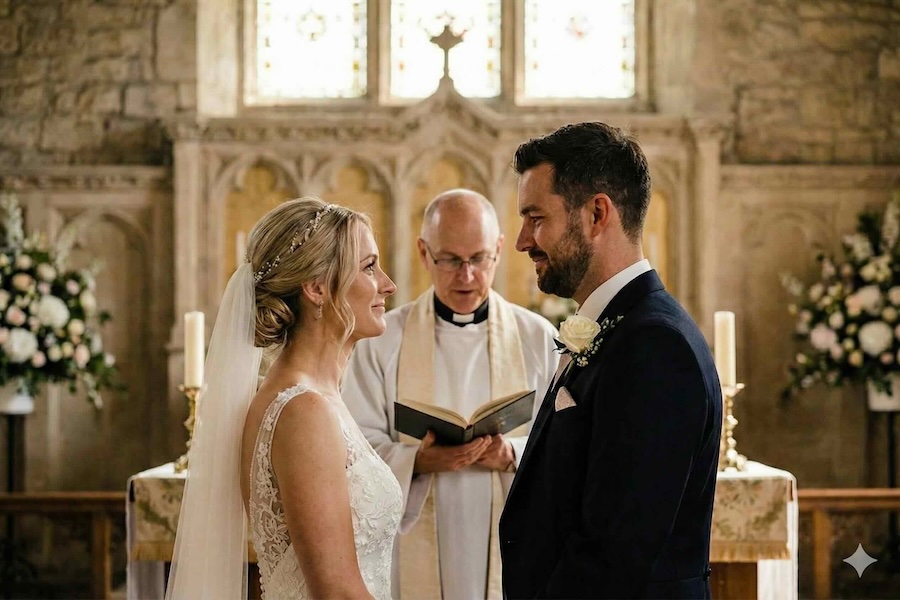
The traditional Saturday wedding in June is iconic, but it is also the most expensive and competitive option available. As couples look to maximize their budgets without sacrificing elegance, off-season and weekday weddings are becoming increasingly popular. Shifting your date to a Friday, Sunday or a winter month opens up a world of benefits that go far beyond simple cost savings. Selecting a unique day allows you to leverage the classic European charm of a historic venue while creating a celebration that stands out from the typical summer wedding circuit.
Maximizing Your Budget and Securing Premium Vendors
The most immediate benefit is financial. Many venues offer reduced rental rates for non-Saturday events or dates during slower months like January or February. These savings can be significant, allowing you to reallocate funds toward better catering, a top-tier photographer or a lavish honeymoon. Furthermore, the competition for vendors drops drastically. That dream photographer or popular live band that is booked solid for every Saturday in summer might be completely free on a Friday in October. You get your first choice of professionals rather than settling for whoever is left. This flexibility often results in more personalized service from vendors who are not juggling multiple events in a single weekend.
Enhancing the Guest Experience with an Intimate Atmosphere
Weekday or off-season weddings often foster a more intimate atmosphere. Guests who make the effort to attend a Friday evening or Sunday brunch wedding are usually your closest friends and family, which naturally filters out the obligatory invites. Additionally, travel and accommodation in downtown Campbell can be cheaper for your out-of-town guests during off-peak times. A winter wedding also offers unique aesthetic opportunities such as rich velvet textures, deep color palettes and dramatic lighting that looks stunning against marble pillars and mahogany bars. By stepping outside the traditional box, you create a wedding that is both financially smart and uniquely yours while giving your guests a memorable experience in a walkable, historic neighborhood.
Contact Us
Give our Event Coordinator a call to discuss the perks of having your special day on our unique open dates.
Banquet Hall, Wedding Reception
One of the most overlooked aspects of wedding planning is that “in-between” time. You have spent months planning the perfect ceremony and designing a stunning reception, but that one hour that connects those two events is sometimes forgotten to give a plan. This time period is critical for guest comfort. A seamless transition prevents boredom, keeps the energy high and ensures your timeline stays on track. When hosting your wedding at a venue like Villa Ragusa, utilizing the architecture to guide this flow makes the logistics effortless.
Managing the Gap Time
The most common friction point is the gap between the vows and the celebration. If your ceremony and reception are at the same location, you have an advantage. However, you must still account for the time needed to flip the room or for the wedding party to take photos.
The best solution is a structured cocktail hour. This isn’t just about drinks. It’s a strategic tool to keep guests occupied. Use a separate space like a foyer or an outdoor balcony to physically move guests away from the main dining hall. This change of scenery signals that the party phase has begun.
Clear Direction and Flow
Guests should never have to guess where to go next. If you are moving from an off-site church to the reception venue, ensure your wedding website and invitations list the timeline clearly. Once on-site, use signage to direct foot traffic. Simple, elegant easel signs near elevators or entryways prevent confusion.
At Villa Ragusa, the marble foyer serves as a natural gathering point. Having staff or ushers stationed here to direct guests toward the bar or appetizers prevents bottlenecks at the entrance. By proactively managing this movement, you ensure the first impression of your reception is one of organization, hospitality and excitement.
If you need tips for planning your reception at Villa Ragusa, please speak with one of our event coordinators. We’d love to help with some out of the box ideas.

Event Planning, Event Venue, Wedding Reception, Wedding Venue
One of your first big wedding decisions is also one of the most defining: how many people will witness your vows? The size of your celebration shapes everything else—the venue, the budget, the vibe, and ultimately, the memories you’ll create. There isn’t a universal “right” size, but there is a right size for you.
The Magic of Intimate Gatherings
Let’s talk intimate first—we’re talking roughly 20-75 guests. These weddings feel less like events and more like gatherings of your innermost circle. You’ll actually have meaningful conversations with every guest. Your photographer can capture genuine moments instead of rushing through formal groupings of distant relatives. Dinner feels like a dinner party where you know everyone’s name, their stories and why they matter to you. The downside? Someone you care about probably won’t make the cut and that’s difficult.
Grand celebrations—think 150-300+ guests—bring different magic. There’s an undeniable energy when you walk into a room full of everyone who’s been part of your journey. These weddings feel like true events with that electric atmosphere that only comes from big gatherings. You can include extended family, work friends, college roommates and childhood neighbors. The tradeoff is intimacy. You’ll spend your reception moving from table to table, making brief appearances and you might barely remember eating your own dinner. Connections feel shallower because there’s simply not enough time.
Questions to Help You Decide
Consider your relationship style. Are you homebodies who treasure small dinner parties with close friends? Or do you thrive in large social settings where you can work the room? Do you have a tight-knit group of ten essential people, or sprawling social networks across multiple life chapters?
Budget matters too, obviously. Smaller weddings allow you to splurge on quality like better food, premium alcohol, luxurious accommodations, stunning locations. Larger weddings require budget-consciousness across categories to make the math work, but they can still be spectacular.
What Kind of Memories?
Think about what you’ll remember. Do you want the memory of your best friend’s toast reaching everyone in an intimate room or the sight of hundreds of people dancing to celebrate you? Both are beautiful, they’re just different kinds of beautiful. Choose the size that matches your personalities, honors the relationships that matter most and creates the kind of memory you want to revisit for the rest of your lives.

Recent Comments